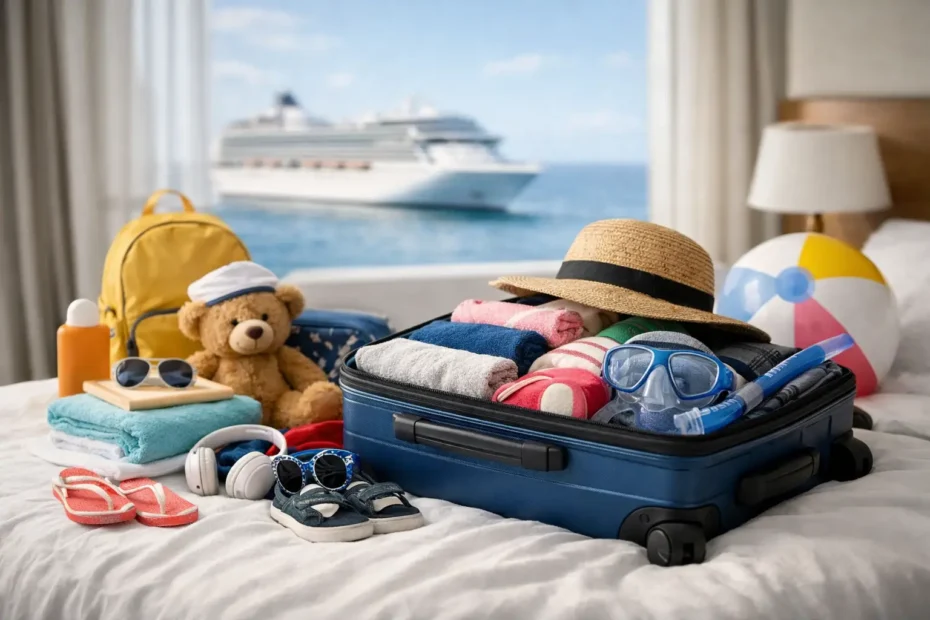
Packing for a family cruise is a puzzle: limited cabin space, multiple climates, formal nights, pool days, and kids who need everything from swimsuits to stuffed animals. Forget something important and you’ll pay ship prices. Overpack and you’ll be tripping over suitcases all week. This cruise packing list for families that works keeps everyone covered without the clutter.
Packing Is Easy. Planning Is Easier With Us.
From the right ship and cabin to documents and port days, The Cruise Headquarters helps families plan every detail.
Before You Pack: Know the Rules
- Prohibited items: Irons, candles, surge protectors, weapons, and drones are commonly banned. Check your line’s list.
- Alcohol limits: Many lines allow a small amount of wine per adult at embarkation; liquor is generally prohibited.
- Luggage: There’s usually no strict weight limit, but bags must fit in your cabin (under the bed is the usual storage spot).
- Dress codes: Check whether your cruise has formal or “dress-up” nights.
Embarkation Day Carry-On (Critical!)
Checked luggage may not arrive at your cabin until late afternoon. Pack a carry-on with:
- Passports or birth certificates and IDs for everyone
- Cruise documents and boarding passes (or the app on your phone)
- Medications for the whole family
- Swimsuits and sunscreen
- A change of clothes for kids
- Phone chargers
- Snacks and a refillable water bottle for kids
- Any valuables, electronics, and jewelry
Documents and Essentials
- Passports (strongly recommended for all)
- Birth certificates if kids don’t have passports (closed-loop U.S. cruises)
- Notarized consent letter if one parent isn’t traveling
- Travel insurance information
- Credit card used for onboard account
- Small cash for tips in port
- Copies of documents stored digitally
Clothing (Per Person, for a 7-Night Cruise)
Adults
- 5–7 casual daytime outfits
- 2–3 swimsuits
- Swimsuit cover-up
- 4–5 evening outfits (smart casual)
- 1–2 dressier outfits for formal or dress-up nights
- Light sweater or jacket (ships can be cool indoors)
- Sleepwear and underwear
- Walking shoes, sandals, and one pair of dressier shoes
- Hat and sunglasses
Kids
- Daytime outfits plus extras for spills
- 3 swimsuits (wet swimsuits take time to dry)
- Rash guards for sun protection
- A nice outfit for formal or dress-up night
- Pajamas, including theme-night outfits if your line hosts them
- Water shoes
- Light jacket
Babies and Toddlers
- Swim diapers (many ships require them for splash zones; regular pools usually don’t allow diapered kids)
- Diapers and wipes for the whole trip (ship stores have limited supplies)
- Formula and baby food, if needed
- Portable sound machine
- Stroller (compact travel stroller recommended)
- Baby carrier for ports
Toiletries and Health
- Reef-safe sunscreen (lots of it)
- After-sun lotion or aloe
- Prescription medications in original containers
- Seasickness remedies (bands, medication approved by your doctor)
- Pain and fever reducer for adults and kids
- Band-aids and small first-aid kit
- Hand sanitizer
- Toothbrushes, toothpaste, hair products
- Insect repellent for tropical ports
Cabin Organization Hacks
- Magnetic hooks: Cabin walls are metal. Hang hats, bags, and lanyards.
- Over-the-door shoe organizer: Perfect for toiletries, sunscreen, and small items.
- Packing cubes: One color per family member.
- Collapsible laundry bag for dirty and wet clothes.
- Night light: Inside cabins are completely dark.
- Lanyards for kids’ cruise cards.
- Cruise-approved USB charger (no surge protectors).
Fun and Entertainment
- Downloaded movies and games for tablets
- Headphones for each child
- Card games and small travel games
- Books and activity books
- Door decorations (popular and fun on many ships)
Beach and Port Day Bag
- Beach towels (often provided by the ship; check before you pack your own)
- Waterproof phone pouch
- Snorkel gear, if your kids prefer their own
- Dry bag
- Reusable water bottles
- Small cash and ID
What NOT to Pack
- Irons and steamers (use wrinkle-release spray)
- Surge protector power strips
- Candles or incense
- Too many shoes
- Beach towels, if your ship provides them
- Full-size toiletries (basic soap and shampoo are usually provided)
Frequently Asked Questions
How many suitcases should a family bring on a cruise?
One medium suitcase per person, or one large shared suitcase per two people, plus carry-ons, is usually plenty for a week.
Do cruise ships have laundry?
Many ships offer laundry services for a fee, and some have self-service launderettes.
Do kids need formal wear on a cruise?
A nice outfit is enough. Formal nights are optional on most lines.
Can I bring snacks onboard?
Sealed, packaged snacks are generally allowed.
Need Help Planning the Rest?
At The Cruise Headquarters, we help families plan every detail, from ships and cabins to documents and port days. Request a free family cruise quote today. Also see cruise planning for large families.
© 2026 The Cruise Headquarters (thecruisehq.com). All Rights Reserved. No reproduction without written permission.