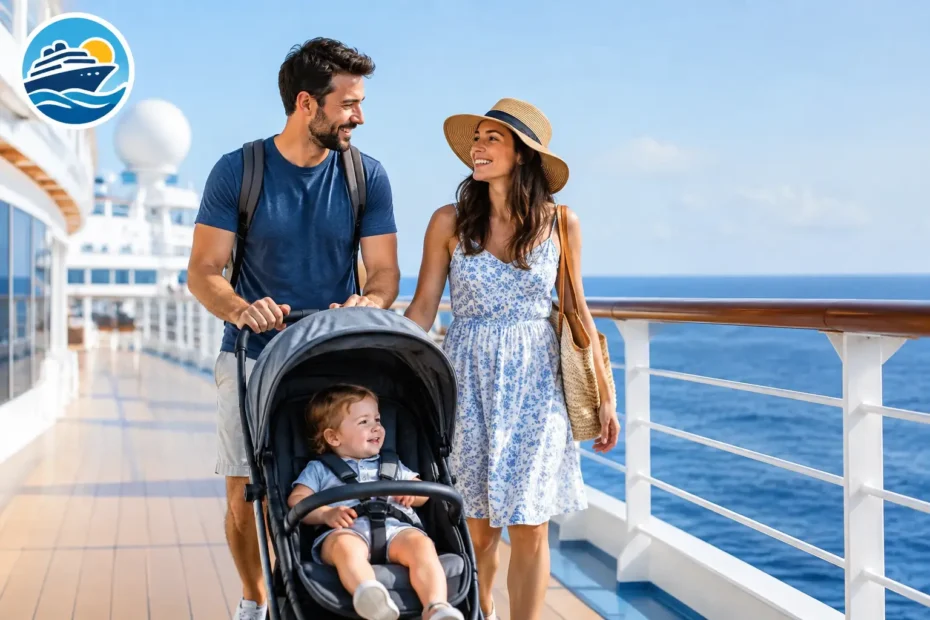
A stroller can be the difference between a relaxed sea day and carrying a tired toddler from breakfast through bedtime. So, do cruises allow strollers? In most cases, yes. Major cruise lines generally welcome them, but the stroller you bring – and how you plan to use it – can make a meaningful difference in your cabin, around the ship, and ashore.
The practical question is less about permission and more about fit. Cruise ships have elevators, wide public areas, and family-friendly spaces, but they also have narrow cabin doorways, busy buffet entrances, pool-deck crowds, and ports with uneven pavement. A little planning now helps your family spend less time managing gear and more time enjoying the sailing.
Do Cruises Allow Strollers? Usually, Yes
Royal Caribbean, Norwegian, MSC, Princess, and other mainstream cruise lines typically permit guests to bring a personal stroller onboard. It counts as part of the items you bring with you, rather than a prohibited item. Still, each line can set its own rules about storage, safety, and whether rental equipment is available on a particular ship.
A stroller cannot block hallways, stairwells, elevator entrances, or public walkways. When you are not using it, plan to store it inside your stateroom. This is where families sometimes get caught off guard: a full-size stroller that works beautifully at home may take up most of the open floor space in a standard cabin.
Before booking, confirm the current policy for your specific cruise line and ship. Policies can change, and an advisor can also help you choose a cabin category with enough room for the way your family actually travels.
Choose the Stroller for the Ship, Not Just the Child
The best cruise stroller is usually not the largest or most feature-packed model. It is the one you can fold quickly, lift over a threshold, park without blocking the cabin, and maneuver through a crowd with one hand.
A compact umbrella stroller or a lightweight travel stroller is often the easiest option. Look for a model that folds in one motion, stands when folded if possible, and has a shoulder strap or carry handle. You may need to fold it before entering a crowded elevator or while waiting in a busy dining area.
That said, compact does not always mean right for every child. If your little one reliably naps in a reclining stroller, enjoys longer walks in port, or needs more support, a slightly larger model may be worth the space trade-off. For infants, families should pay close attention to weight limits, recline positions, and safe-sleep guidance. A stroller is useful for supervised walks, but it is not a replacement for a safe sleeping space in the cabin.
Think about your itinerary, too. A smooth boardwalk-style port and a cobblestone-heavy historic port call for different wheels. Small wheels are convenient onboard but can struggle on rough surfaces. Larger wheels handle bumps better but take up more room in the cabin. There is no universal winner – just the best compromise for your family.
Cabin Space Is the Part Families Underestimate
Most cruise cabins are efficiently designed, which is a polite way of saying every item needs a place. Before sailing, measure your folded stroller and compare it with the cabin layout you are considering. A cabin with a little extra square footage, or one with a better configuration around the bed, can remove a daily frustration.
Once onboard, do a quick setup before unpacking everything. See whether the stroller fits upright near the entry, slides under a table, or can be folded and tucked beside luggage. Keep it clear of the door, bathroom entrance, and emergency information posted near the cabin door.
If you are traveling with a crib, portable sleep space, diaper bag, and extra child gear, cabin selection becomes even more important. Connecting cabins or a larger family-friendly category may be a better fit than trying to make a standard room hold equipment it was not designed to accommodate. This is one of those details that is much easier to solve before the booking is finalized.
Getting Around the Ship With a Stroller
Ships are generally stroller-friendly, especially in main public areas, but timing matters. Elevators can become crowded after shows, during meal rushes, and when everyone heads to the pool at once. If your child can safely walk for short stretches, you may find it easier to fold the stroller briefly and use the stairs when practical.
At the buffet, avoid parking the stroller in a narrow traffic lane while you gather food. One adult can hold the table while the other picks up plates, or bring your child through the line only when necessary. The same courtesy applies outside theaters, lounges, and restaurants: keep pathways open, even when the ship feels busy.
Pool decks deserve extra care. Wet surfaces, music, deck chairs, and crowds make it harder to keep track of a parked stroller. Use the brake every time, keep it away from pool edges and stairways, and never leave a child unattended. A stroller is a convenience, not a place to set your child while the adults step away.
Strollers in Port: Plan for the Actual Day Ahead
Bringing a stroller ashore is usually allowed, but whether it is helpful depends on the port call. Consider how far you will walk from the ship, whether there are stairs or tender boats involved, and what the ground conditions are likely to be.
Tender ports require special thought. You may need to fold the stroller before stepping into the smaller boat that takes guests from the ship to shore. A lightweight model is far easier to manage while holding a child, bag, and railing. Crew members are there to assist, but you should still be able to fold and carry your stroller without creating a difficult transfer.
For excursions, check the activity description closely. Some experiences are simply not stroller practical because of terrain, steps, vehicles, or the pace of the group. Rather than forcing the stroller into an activity that will become stressful, choose a port day that works for your child’s age and energy level. A well-matched excursion is better than an ambitious plan that leaves everyone exhausted.
Should You Bring Your Own or Rent One?
Bringing your own stroller gives you familiarity and control. You know how it folds, where your child is comfortable, and whether it can handle a nap. It also means you have it from the moment you board through the final morning of the cruise.
Rental availability varies by cruise line and ship, and quantities may be limited. Some ships may offer strollers or related baby equipment, while others may not. Rental gear can be convenient, but do not assume it will be available, the right size, or suitable for every port day. Confirm the details in advance if you are depending on it.
For many families, the strongest choice is to bring a compact personal stroller and treat any onboard rental option as a backup, not the plan.
A Simple Pre-Cruise Stroller Check
Before you pack, make sure your stroller meets these practical tests:
- It folds easily and is light enough for one adult to carry.
- It fits inside your planned stateroom without blocking the door or walkway.
- Its brakes work reliably, and the harness fits your child correctly.
- You can use it comfortably on the surfaces expected in your ports.
- You have a rain cover or sun shade if your itinerary and stroller model call for one.
Also put a visible luggage tag or identification label on the stroller. On a busy ship, many travel strollers look alike, particularly near dining venues or outside kids’ spaces.
Get the Family Details Right Before You Book
A cruise with young children involves more than deciding whether to bring a stroller. The right sailing, ship, cabin location, dining schedule, and port plan can make daily life far easier for parents, grandparents, and caregivers traveling together.
The Cruise Headquarters helps families look beyond the headline itinerary and plan for the real details that shape the trip. We can help identify a ship that suits your group, make sense of cabin options, apply available promotions, and continue monitoring pricing after you book. If a question comes up before sailing, you have someone in your corner instead of having to sort it out alone.
Bring the stroller that makes your day easier, not the one that creates another thing to manage. With the right cabin and a realistic plan for sea days and ports, your family can move through the ship with far more confidence.
