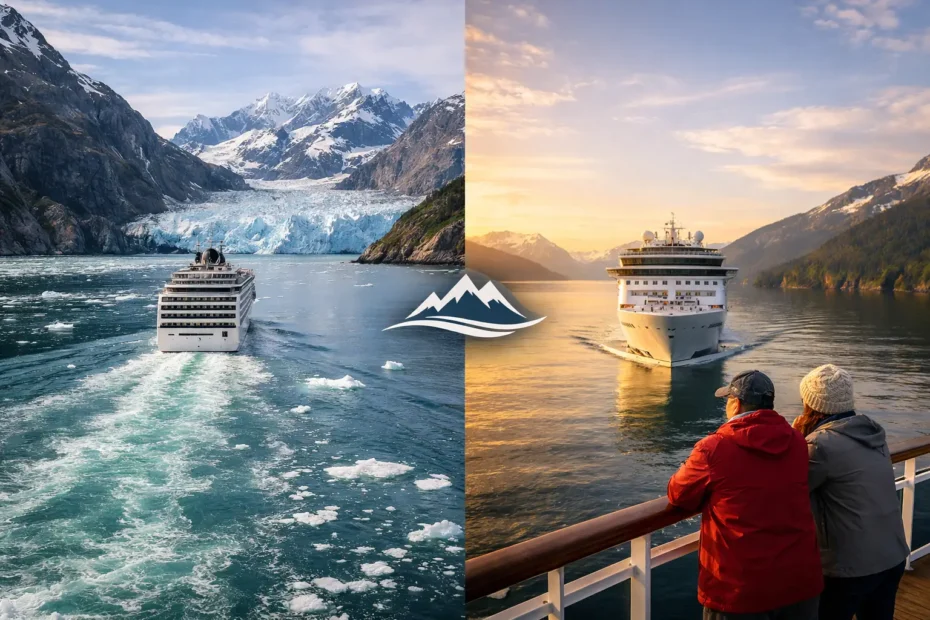
A one-way Alaska cruise can look nearly identical on a map and still feel very different once you are aboard. The real question behind Alaska northbound versus southbound is not which direction is objectively better. It is which sailing puts the experiences you care about in the right order, on the right days, with the least second-guessing.
For many travelers, this is a major vacation with family time, bucket-list scenery, and a meaningful investment behind it. That is why choosing based on a quick glance at ports alone can lead to disappointment. Direction affects your boarding and departure ports, the rhythm of the itinerary, and sometimes how the scenery builds throughout the week. The cruise line, ship, glacier day, port times, and cabin category still matter just as much.
Alaska Northbound Versus Southbound: The Basic Difference
A northbound cruise generally sails from Vancouver to Seward or Whittier, Alaska. A southbound sailing reverses that route, beginning in Seward or Whittier and ending in Vancouver. Both directions typically combine coastal ports, Inside Passage scenery, and a glacier-focused day, depending on the sailing.
The ports may be similar, but the sequence is not. On a northbound sailing, the journey often feels like it builds toward bigger, more dramatic mountain scenery as the week progresses. On a southbound itinerary, that high-impact scenery can arrive early, followed by a gradual return through the Inside Passage and coastal ports.
That distinction matters more than people expect. Some guests love starting strong and checking off the most dramatic views early. Others prefer a steady buildup, with the cruise finishing on an especially memorable visual note. Neither approach is wrong. It comes down to how you like to experience a vacation.
Choose Northbound If You Want the Scenery to Build
Northbound itineraries are often a natural fit for travelers who want anticipation to grow throughout the sailing. The first portion can include classic coastal ports and peaceful Inside Passage views, while the final days move closer to Alaska’s more rugged coastline and larger-scale mountain scenery.
This direction can feel particularly satisfying for first-time Alaska cruisers who want a clear sense of progression. Each day tends to reveal a little more of the destination, and the cruise ends with an impressive finale rather than a gradual wind-down.
Northbound may also appeal to guests who like to settle into the ship before their biggest sightseeing days. You have time to learn the layout, get comfortable with dining times, and decide where you prefer to watch scenic cruising before the itinerary reaches its most immersive moments.
There is a trade-off. If an itinerary includes a glacier day later in the sailing, weather or operational changes can feel more consequential because it may be one of your final major experiences. Cruise lines work hard to deliver these scenic days, but glaciers and coastal conditions are never something any advisor should promise as a certainty.
Choose Southbound If You Want Big Alaska Early
Southbound itineraries often suit travelers who want the grandest scenery near the beginning of the cruise. Starting in Seward or Whittier places you closer to the dramatic coastal landscapes right away, creating an immediate sense that you have arrived in Alaska.
For some families and groups, that early momentum is a real advantage. The most anticipated scenery happens before anyone is tired from a busy week, and there is still time afterward to enjoy ports, onboard dining, and the relaxed pace of the Inside Passage.
Southbound can also be a smart emotional fit for travelers who prefer to experience their headline moments first. If glacier viewing and mountain scenery are the main reasons you chose Alaska, getting those days earlier can make the rest of the sailing feel like a bonus instead of a countdown.
The trade-off is that the itinerary may feel like it eases off visually as the week goes on. That does not mean the later days are less worthwhile. The Inside Passage can be remarkably beautiful, and port days bring their own character. But if your ideal vacation builds to a finale, northbound may better match your style.
The Direction Matters Less Than These Four Details
It is easy to focus on northbound versus southbound and miss the itinerary details that can have a larger impact. Before choosing, compare these items sailing by sailing:
- Glacier access: Look for the specific glacier or glacier area included, plus how much scenic cruising time the ship is scheduled to have. A sailing with a stronger glacier day may be worth choosing even if it is not your preferred direction.
- Port times: A port call from early morning into the evening offers a different experience than a short afternoon stop. Do not assume two cruises visiting the same port give you the same amount of time there.
- Ship and cabin options: Some ships have more indoor viewing spaces, better family cabin choices, or more of the dining and entertainment features that matter to your group.
- Your group’s priorities: A couple focused on quiet scenery may choose differently than a multigenerational family that wants longer port calls and an easy onboard routine.
A seven-night sailing is a tightly planned experience. A small change in port timing, a different glacier route, or an itinerary that includes one preferred stop can matter far more than whether the ship is technically heading north or south.
Cabin Side: Do Not Overpay for a Myth
Many travelers ask whether they need the port or starboard side for Alaska scenery. The honest answer is that there is no single correct side for an entire sailing.
Scenic cruising can involve turns, changing routes, varying glacier approaches, and views on both sides of the ship. Port days also shift the equation because your view may be of the pier, the town, open water, or another ship. A balcony can be wonderful in Alaska, but it is not a requirement for seeing the destination well.
If a balcony is a priority, choose the cabin location and category that feel right for your budget and comfort. If you select an ocean-view or interior cabin, plan to use the ship’s public decks and lounges during scenic periods. The best view is often the one you can enjoy without feeling rushed or crowded into a small space.
Consider Your Travel Style, Not Just the Map
Choose northbound when you want the cruise to build toward its biggest scenery, enjoy a gradual introduction to Alaska, and like the idea of ending on a high note. Choose southbound when you want dramatic views early, prefer to experience major scenic moments before the middle of the week, or simply find a better ship and itinerary combination in that direction.
For repeat cruisers, direction can be a useful way to make a familiar region feel fresh. Reversing the route changes the order of ports, the timing of scenic days, and the way you experience the coastline. It is a subtle difference, but on a destination known for long daylight, changing weather, and remarkable views, subtle differences can shape the whole trip.
Questions to Ask Before You Book
Is northbound or southbound better for a first Alaska cruise?
Either can be excellent. First-time cruisers should usually prioritize the glacier experience, port schedule, ship, and cabin options before choosing direction. Northbound often feels like a gradual build; southbound often delivers the most dramatic scenery earlier.
Will both directions visit the same ports?
Often, but not always. Cruise lines may use different port combinations, arrival times, and glacier routes even on ships sailing the same general one-way path. Compare the day-by-day itinerary rather than assuming reverse routes are identical.
Does a one-way cruise offer a better Alaska experience than a roundtrip sailing?
Not automatically. One-way sailings can cover a broader stretch of coastline, while roundtrip itineraries may offer greater simplicity and can still include exceptional ports and glacier viewing. The best choice depends on the particular sailing and what matters most to your group.
The right Alaska cruise is the one that gives you confidence before you book, not questions after you board. A Cruise Headquarters advisor can compare the direction, ship, glacier day, cabin choices, promotions, and itinerary details side by side, then continue monitoring for better pricing or eligible offers. You should feel looked after from the first planning conversation through the day you sail.
