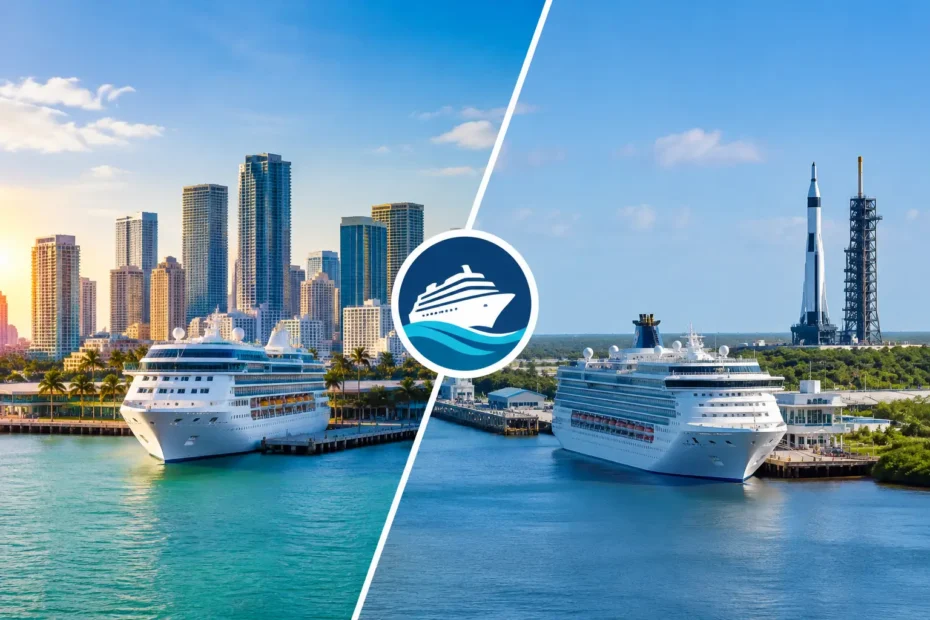
A cruise can look nearly identical on paper until you notice the departure port. In the Miami versus Port Canaveral decision, the right answer is rarely just about which terminal is closer. Your ship, cabin options, sailing length, group size, parking needs, and comfort with embarkation day logistics can all change the value of one port over the other.
Both are major Florida cruise ports with an enormous range of sailings. Both can work beautifully for couples, families, first-time cruisers, and experienced guests. The smarter choice is the one that puts you on the right ship and itinerary without creating avoidable stress before you ever step aboard.
Miami Versus Port Canaveral at a Glance
Miami is one of the country’s busiest cruise markets and a frequent homeport for newer ships, premium ship-within-a-ship experiences, and a deep selection of Caribbean itineraries. It is often the better fit when a particular ship is the main event, when you want more choices across cruise lines, or when a short sailing from South Florida matches your schedule.
Port Canaveral, on Florida’s east-central coast, is equally compelling for travelers who are driving from much of Central and North Florida, as well as guests who want access to several of the industry’s biggest family-focused ships. It has a reputation for straightforward port access, plentiful cruise parking options, and a broad lineup of three-, four-, and seven-night sailings.
Neither port wins every comparison. The strongest choice comes down to the sailing you are considering, not a blanket rule about Miami or Canaveral.
Choose Miami When the Ship and Itinerary Lead
Miami’s biggest advantage is selection. Major lines regularly place high-profile ships here, including ships designed around large-scale entertainment, specialty dining, private retreat areas, and multiple cabin categories. If you have your eye on a specific Royal Caribbean, Norwegian, MSC, or Princess ship, Miami may be where it sails from most consistently.
Itineraries are another reason to look closely at Miami. The port supports a wide variety of Eastern, Western, and Southern Caribbean routes, along with shorter sailings that make it easier to fit a cruise into a tighter calendar. Some itineraries from Miami offer port combinations that are simply not available from Port Canaveral on the same dates.
Miami can also make sense for groups with mixed priorities. One couple may care about an adults-focused retreat area, while another needs connecting cabins or a convenient inside cabin. A larger pool of ships can create more options for everyone to sail together without settling for a cabin setup that does not work.
The trade-off is that Miami is a large, active urban port. Embarkation day calls for a little more patience and a clear plan. Traffic patterns, terminal assignments, and ship schedules can vary, so treating your arrival window as a suggestion rather than a firm plan is a mistake. Build in time, follow the cruise line’s terminal instructions, and make sure every traveler has the right documents ready before leaving for the port.
Choose Port Canaveral for Convenient Driving and Big-Ship Fun
Port Canaveral is often the practical favorite for travelers driving from Central Florida and many areas farther north. The approach to the port can feel more contained than navigating a major downtown environment, and the cruise terminals are built around a high volume of turnarounds. That does not mean you should arrive late, but it can make the day feel more manageable for families carrying luggage, car seats, strollers, or extra bags for a longer sailing.
The port is especially strong for travelers looking at large ships with extensive onboard attractions. Royal Caribbean has a major presence here, and other cruise lines also offer a healthy range of ships and sailing lengths. For multi-generational groups, that combination matters. Grandparents may want a balcony and quieter areas to relax; parents may prioritize youth programming; children may be focused on pools, shows, and activities. A ship with enough variety can keep the whole group happy without turning the vacation into a negotiation.
Port Canaveral also deserves a close look when parking is part of the plan. Parking availability, terminal proximity, and luggage handling arrangements should be confirmed for your specific sailing, but many drivers appreciate the port’s generally direct layout. Still, “easy port” does not mean “no planning.” Verify your terminal, reserve parking when it is offered or advisable, and allow extra time during holidays, school breaks, and peak sailing periods.
The limitation is choice on a given date. You may find fewer alternatives if you are set on a particular cabin type, a smaller ship, or an unusual itinerary. If Port Canaveral has the right ship and dates, that is not a drawback. But if you are comparing it with Miami only because the drive seems simpler, make sure you are not passing over a ship, itinerary, or promotion that better serves your vacation.
Compare the Full Cruise, Not Just the Port
A departure port is one part of the purchase. Before choosing between Miami and Port Canaveral, compare the complete sailing side by side: the ship, itinerary, cabin category, total trip length, included features, dining preferences, and the policies that matter to your group.
For example, two seven-night Caribbean cruises may visit similar ports but deliver completely different experiences. One ship may have a quieter, more traditional onboard feel. Another may center on entertainment and activity. One may offer a cabin category with added access or lounge benefits that makes sense for a couple celebrating a milestone. Another may offer better cabin configurations for a family of five.
Do not assume the newer ship is automatically the better choice, either. Newer ships often have more venues and more cabin types, but the right fit depends on how you want to spend your sea days. Likewise, do not choose an itinerary solely for the number of stops. A schedule with fewer ports and more time onboard can be ideal if the ship itself is a major reason you are cruising.
Embarkation-Day Details That Protect Your Vacation
The easiest way to start strong is to reduce decisions on embarkation morning. Complete online check-in as soon as your cruise line opens it, choose an arrival time if one is assigned, and verify the terminal shortly before you travel. Terminal locations can change, even for the same port.
Keep passports or other approved travel documents, boarding information, required forms, medications, and valuables with you rather than placing them in checked luggage. Tags should be attached exactly as instructed. If you are traveling with several households, make one person responsible for confirming that everyone understands the arrival time and terminal location.
For drivers, decide in advance whether you will park at the port or use another approved arrangement. The cheapest option is not always the best value if it creates uncertainty, complicated transfers, or extra time on a day when your priority should be getting onboard comfortably. Families and groups should also think about luggage volume honestly. What fits easily in one vehicle for a weekend may not fit for a weeklong cruise with formalwear, child gear, and multiple cabin occupants.
How to Make the Better Booking Decision
Start with your non-negotiables. Is there a ship you have wanted to sail? Do your dates have little flexibility? Are you traveling with children, a large group, or someone who needs a particular cabin location? Is a balcony, suite, accessible cabin, or connecting-room arrangement essential? Once those answers are clear, the port comparison becomes much simpler.
Then look beyond the first fare you see. Promotions, cabin availability, added amenities, and fare changes can affect the real value of a sailing. This is where having an advocate matters. A cruise advisor can compare comparable options, identify the details that are easy to miss, and continue monitoring eligible price changes after booking rather than leaving you to watch every promotion yourself.
At The Cruise Headquarters, we help travelers weigh the complete picture: Miami or Port Canaveral, the ship that fits their style, the cabin that fits their group, and the best available value for the sailing. You should not have to spend hours decoding deck plans, comparing promotions, or calling a cruise line when something changes.
Frequently Asked Questions
Is Miami or Port Canaveral better for first-time cruisers?
Either can be excellent. Port Canaveral may feel simpler for drivers who value a direct port experience, while Miami can offer more ship and itinerary choices. For a first cruise, prioritize a ship with the activities, dining, cabin options, and sailing length that match your travel style.
Which port has better cruise deals?
Neither port consistently has the best value. Pricing changes based on ship demand, sailing date, cabin inventory, and cruise line promotions. Compare like for like before deciding. A lower starting fare is not always the better booking if the cabin category, itinerary, or included benefits are different.
Can my terminal change after I book?
Yes. Cruise lines can adjust terminal assignments. Check your cruise documents and pre-cruise communications close to embarkation day, and do not rely on an old terminal address from a previous sailing.
The best departure port is the one that supports the cruise you actually want to take. Choose Miami when its ship selection or itinerary earns the extra planning, choose Port Canaveral when its sailings and driving convenience fit your group, and let the details guide the decision before you commit.
